Collection notes
The art of looking.
A slower way to explore mineral specimens through form, colour and the details that make each photograph worth a second look.
Begin with the whole
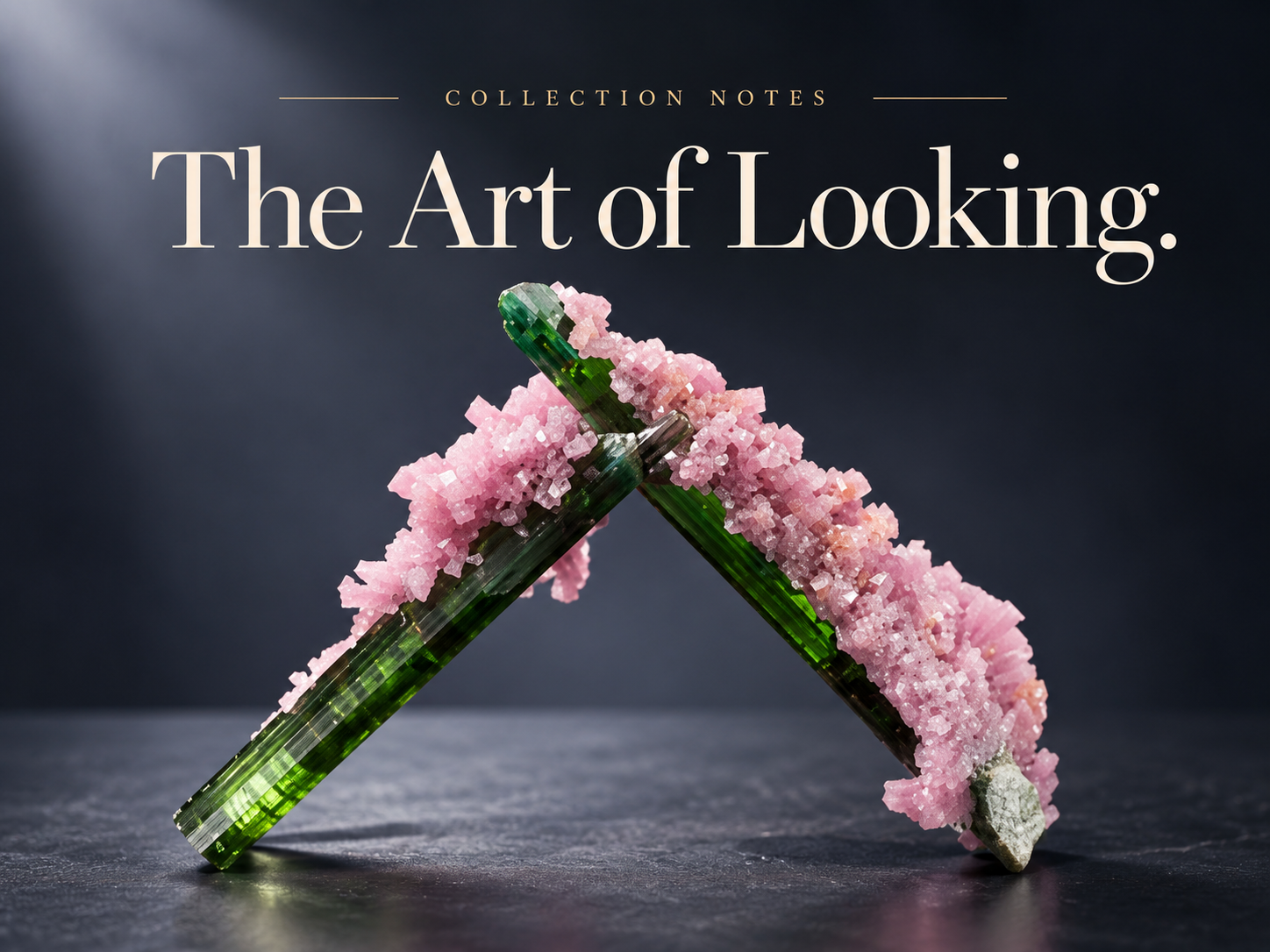
Before looking for a name, look at the silhouette. Follow the outer edge of the specimen: where it rises, where it breaks, where a smaller crystal interrupts the larger shape. A photograph can become more interesting when you give its composition a little time.
Let colour lead your eye
In the Tourmaline with Lepidolite pictured here, green and pink create two distinct areas of attention. Move between them. Notice how the long crystal draws the eye in one direction while the surrounding material offers a different rhythm. These are observations you can make before knowing anything about a specimen’s history.
Then look closer
Use the collection’s photograph viewer to move from the whole specimen to a single detail. Look at an edge, a change in surface, or the place where two forms meet. Then return to the full image. Details have more meaning when you can see their relationship to the whole.
Leave room for questions
An enlarged photograph does not establish a specimen’s physical size. Nor does a striking image tell you its locality, condition or collecting history. Where those details are not supplied, keep them as questions for a conversation with the collection. Looking carefully includes recognising what a photograph cannot tell you.
Return to the first impression
After exploring the details, step back. The specimen may now feel different: a shape you overlooked has become its defining feature, or a quiet area has become the most compelling part. This is the invitation behind the Rudolph collection online—an opportunity to look, return, and discover something more.
Further reading: Rudolph Minerals
Explore the collection
Join the conversation
What caught your eye?